


Ideas

28th & Blake
Project
Ideas
Rhonda spoke about how healthcare providers might reimagine care outside of a hospital setting with the rise of ambulatory care. She mentioned a quote she used often in her work as a registered nurse, “if a patient is staying the same from hour to hour and day to day– they are getting worse.” Likewise, if healthcare institutions do not adapt and only maintain the status quo, they are not keeping up with the latest evidence and innovation in order to provide forward thinking care delivery models to their patients. She stressed that healthcare leadership must be willing to seek feedback from their workforce and teams, and to challenge their own assumptions to move beyond the obvious. Safety should always be at the core of all ambulatory care design. Four ways to ensure this include:
Patients and families should be heavily involved in the design process, how might we ensure we have a way to gain input and insights from them?
Do we administer a standardized survey to measure patient safety and, if so, how those results are used? Are there intentional efforts to make improvements?
Jamie then spoke on the best ways to reimagine care outside of a hospital setting and how to overcome challenges. Some of those unforeseen challenges to moving surgical care from inpatient to outpatient care can include finding the correct space to house necessary equipment and employees, not having access to the same support services as the hospital, and not having access to hospital building and support management.
While inpatient care has everything needed on site, outpatient care is dependent on a landlord that may not understand healthcare needs.
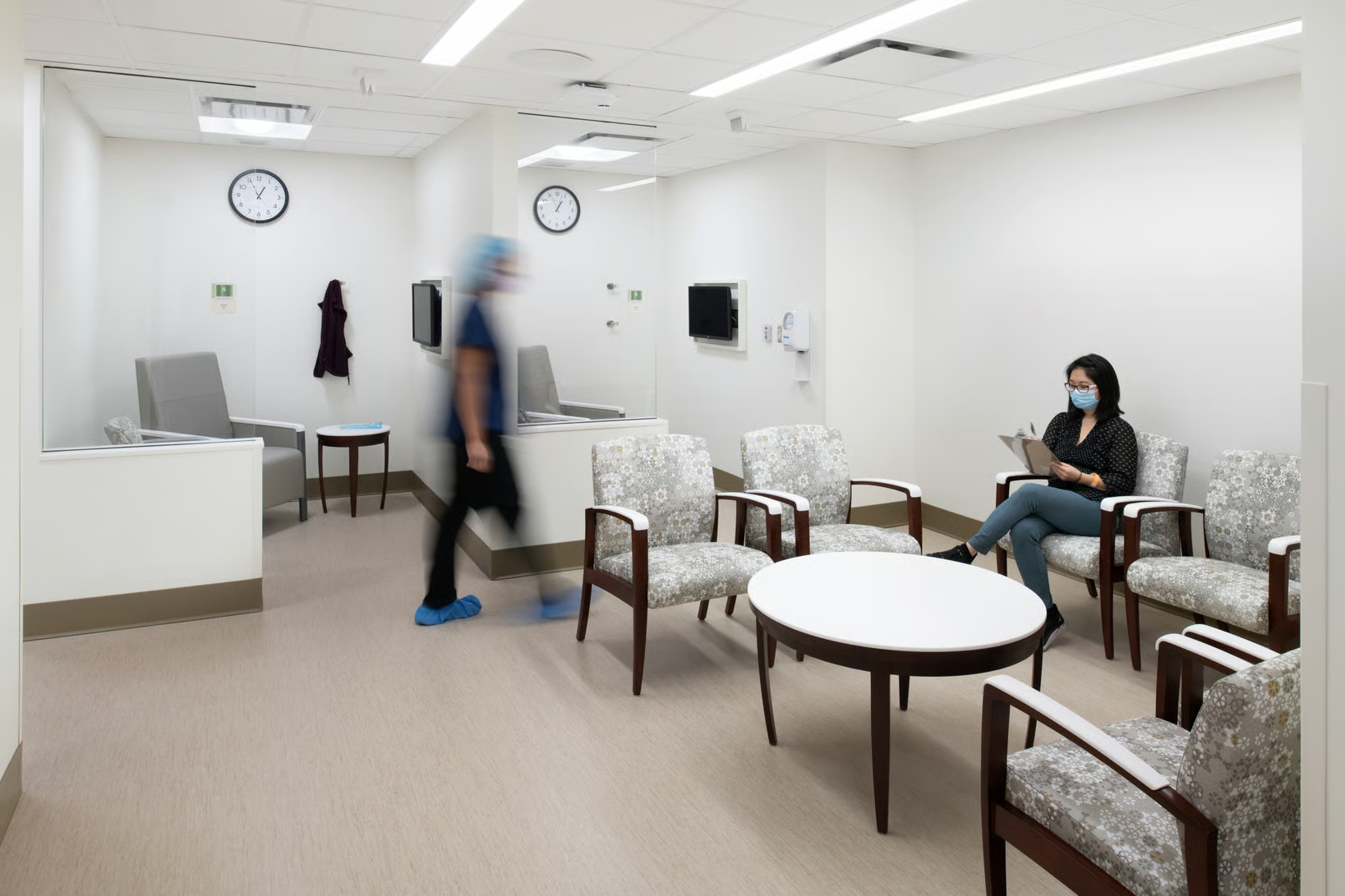
However, an advantage that outpatient care provides is the ability to focus on the smaller scale. The providers do not need to worry about brand standards of the overall hospital or the standards of a neighboring department. For example, a waiting room for a younger, healthier population can bring a lot of elements of hospitality and funds can be spent where it will matter the most.
Other opportunities with outpatient care centers include:
As the healthcare sector continues to grow, healthcare providers and designers will need to get creative to provide more and more care outside of a traditional hospital setting.